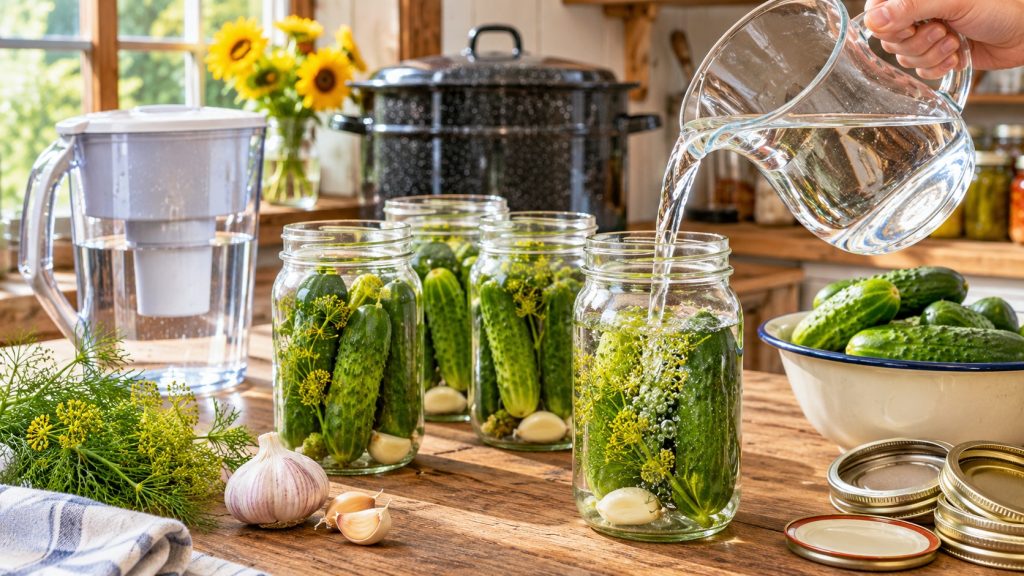
The best water for canning is safe drinking water with a low mineral content. Soft tap water, distilled water and appropriately filtered water are all suitable choices, with distilled water being particularly useful for pickling and preparing clear brines.
If you’ve ever opened a jar of homemade pickles to find cloudy liquid or pulled your Mason jars out of the canner covered in a chalky white film, your water supply could be partly responsible.
Fortunately, choosing the right water for home food preservation doesn’t need to be complicated or expensive.
What Is the Best Water for Canning?
The type of water you should use depends on what you’re preserving and the quality of your household water supply.
There’s also an important difference between water used as an ingredient in your canning recipe and water used to fill your canner. Mineral content matters considerably more when the water becomes part of the food you’re preserving.
Here’s how the most common options compare:
| Type of water | Best use for canning |
|---|---|
| Tap water | Everyday canning if safe to drink and relatively low in minerals. |
| Filtered water | Regular food preservation when appropriately treated. |
| Distilled water | Pickling, fermentation and clear fruit syrups. |
| Reverse osmosis water | An everyday low-mineral alternative to distilled water. |
| Well water | General canning when tested and confirmed safe. |
| Hard water | Can be used in the canner, but is less desirable as an ingredient. |
| Bottled spring water | Suitable if safe to drink, although mineral content varies. |
For most home canners, there’s no need to purchase bottled water if your existing water supply is suitable.
Can You Use Tap Water for Canning?
Yes! Safe drinking-quality tap water is suitable for most home canning recipes, especially if you live in an area with naturally soft water.
Problems are more likely to arise if your water contains high concentrations of dissolved minerals.
According to Penn State Extension, calcium, magnesium and iron can affect the appearance and flavor of home-preserved foods.
Hard water can contribute to:
- Cloudy pickling brine.
- White sediment inside jars of canned vegetables.
- Discoloration of fruits and vegetables.
- Unpleasant or metallic flavors.
- Chalky deposits on canning jars and equipment.
If you frequently notice limescale inside your kettle or around your kitchen faucets, consider using low-mineral water when preparing your preserves.
Is Filtered Water Better for Canning?
Filtered water can be a practical choice for households that regularly preserve garden produce, particularly during the busy summer and fall harvests.
For homesteaders experiencing water quality problems throughout the house, options such as a Filterway whole home water filtration system may be worth exploring rather than continually purchasing bottled water.
However, not all water filters perform the same function.
- Activated carbon filters: Help reduce chlorine taste and unpleasant odors.
- Sediment filters: Capture suspended particles such as dirt and rust.
- Reverse osmosis systems: Reduce many dissolved minerals and other contaminants.
- Water softeners: Reduce the calcium and magnesium responsible for water hardness.
A standard refrigerator or pitcher filter won’t necessarily remove dissolved minerals or harmful microorganisms. Choose a treatment system based on your water quality and the substances it is verified to remove.
Prepare Your Water Supply Before Canning Season
If you already filter your household water, include filter maintenance in your annual canning preparations.
Alongside checking your pressure canner, organizing your jars and stocking up on lids, make sure you have compatible replacement water filters available.
Follow the manufacturer’s recommended replacement schedule to keep your filtration system functioning properly throughout the harvest season.
Can You Use Distilled Water for Canning?
Distilled drinking water is an excellent choice for home food preservation because it contains very few dissolved minerals.
It’s particularly useful when preparing:
- Dill pickles and pickled vegetables.
- Fermented vegetables that require a liquid brine.
- Syrups for canned peaches, pears and other fruits.
- Canned vegetables prone to mineral-related discoloration.
However, using distilled water for every aspect of canning can become unnecessarily expensive.
A more economical approach is to reserve distilled water for recipes where it becomes an ingredient and use ordinary tap water to fill your canner.
Reverse osmosis drinking water is another convenient low-mineral alternative.
What Is the Best Water for Pickling and Making Brine?
Soft or distilled water is generally the best choice for making pickles.
Minerals in hard water can affect the texture and color of pickled vegetables, while iron may cause otherwise light-colored produce to darken.
The University of Minnesota Extension also recommends soft or distilled water when fermenting produce in a liquid brine.
For vinegar-based pickles, water quality is only one part of successful preservation. Always:
- Use a research-tested pickling recipe.
- Choose commercial vinegar with the specified acidity, typically 5%.
- Use canning or pickling salt as directed.
- Maintain the recipe’s exact vinegar-to-water ratio.
Never add extra water to make your pickles less sour. Diluting the vinegar can reduce acidity to unsafe levels.
How to Soften Hard Water for Pickling
If you don’t have distilled or suitably filtered water available, you can reduce some types of water hardness using a traditional method.
- Boil safe drinking water for 15 minutes.
- Remove it from the heat, cover it and let it stand for 24 hours.
- Skim off any film that forms on the surface.
- Carefully pour the water into a clean container, leaving the sediment behind.
This method can reduce temporary water hardness, but it won’t remove all dissolved minerals or make chemically contaminated water safe to drink.
Is Well Water Safe for Canning?
Many homesteaders and rural households rely on private wells for their water supply.
Well water can be perfectly suitable for canning, provided it has been tested and confirmed safe for drinking.
The CDC recommends testing private well water at least annually for coliform bacteria, nitrates, total dissolved solids and pH. Additional testing may be necessary depending on local environmental conditions.
Remember that clear, pleasant-tasting water isn’t necessarily free from contaminants.
If you’re uncertain about your well water quality, use a known safe water source until testing confirms otherwise. Neither boiling nor pressure canning reliably removes harmful chemical contaminants.
What Water Should You Use in a Water Bath or Pressure Canner?
Clean tap water is generally sufficient for filling both types of canners. You don’t need to use distilled water just to process your jars.
The amount of water required depends on your canning method:
- Water bath canning: Keep the jars submerged beneath at least one inch of water, or two inches for processing times longer than 30 minutes.
- Pressure canning: Generally requires two to three inches of water in the bottom of the canner, unless your equipment instructions or tested recipe specify otherwise.
Always follow the recommended processing time, temperature or pressure, including any necessary altitude adjustments.
How to Prevent White Residue on Canning Jars
That chalky white coating that sometimes appears on the outside of freshly processed Mason jars is often caused by hard water.
To reduce mineral deposits, adding two tablespoons of white vinegar to the water in your canner, provided your equipment instructions permit it.
To remove existing deposits from empty jars, soak them in a solution of one cup of white vinegar per gallon of water before washing and rinsing.
Cloudiness inside a sealed jar, however, deserves more caution. While minerals and salt additives can cause cloudy liquid, spoilage is another possible cause.
Never taste questionable home-canned food to determine whether it’s safe.
Choosing the Right Water for Your Next Canning Project
You don’t need expensive equipment or gallons of bottled water to enjoy delicious homemade preserves.
For everyday canning, safe tap water is usually sufficient. For pickling, fermentation and recipes where mineral content affects the finished product, distilled or low-mineral filtered water is often the better choice.
Above all, remember that good water quality complements safe canning practices rather than replacing them.
By using the right ingredients, following tested recipes and choosing suitable water, you can enjoy beautiful, flavorful home-canned foods long after the growing season ends.
Leave a Reply