A jar of sauerkraut bubbling on the counter can look mysterious. Is it safe to leave vegetables out of the fridge? And where should you start?
Fermented foods for beginners don’t require complicated equipment. You can sample a few fermented foods from the grocery store, then follow a tested recipe to make your own. Here’s how fermentation works, nine foods to try and a safe first project.
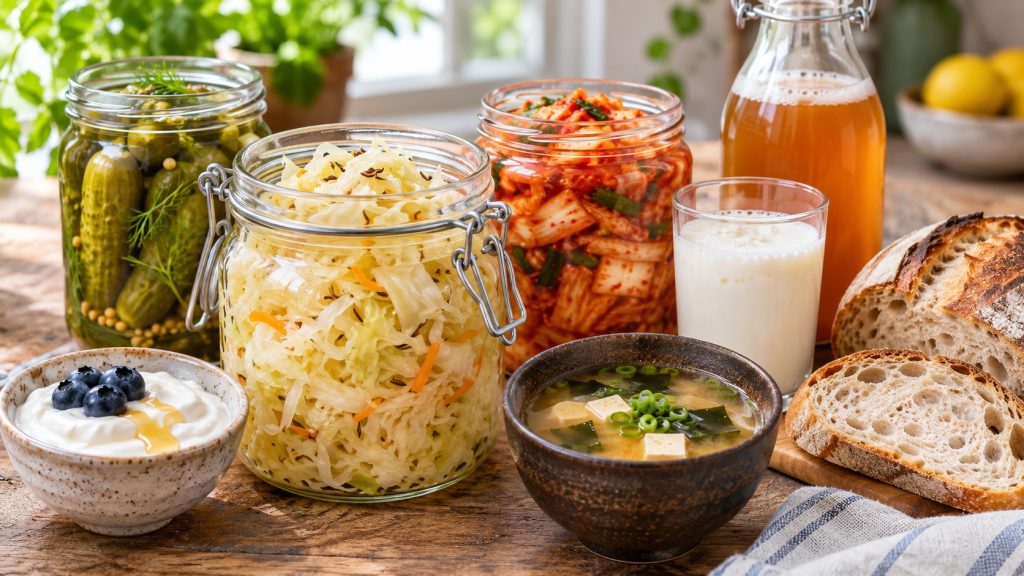
What Are Fermented Foods?
Fermentation happens when microorganisms, including bacteria and yeast, transform sugars in food. In fermented vegetables, helpful bacteria turn sugar into lactic acid. That lactic acid makes the vegetables more acidic, helps preserve food and creates their tangy flavor.
Other cultures transform milk into yogurt or kefir, help sourdough rise or turn sweetened tea into kombucha. This natural process changes food’s taste and texture.
People have used fermentation for centuries, and traditional preservation still feels relevant. Tastewise explores intentional food preservation through its “Preserved on Purpose” trend in the full forecast for 2027. A homemade ferment isn’t just about extending storage; it’s about creating flavor from familiar ingredients.
Not all bacteria are harmful. Given a tested recipe and the correct salt level, the good bacteria can flourish while unwanted bacteria are discouraged.
9 Fermented Foods Worth Trying First
You don’t need to ferment everything yourself. Try these fermented foods, then choose a favorite to make at home.
- Sauerkraut: Shredded cabbage and salt become crunchy, tangy sauerkraut. It’s an excellent first ferment because the method is simple and well documented.
- Kimchi: This Korean favorite combines napa cabbage, daikon radish, garlic, ginger and chili. Its spicy flavor suits rice, eggs and noodle dishes.
- Fermented pickles: Cucumbers ferment in brine rather than vinegar. The result is tangy pickles; choose refrigerated, unpasteurized versions for live cultures.
- Carrots and beets: Fermented vegetables can be colorful and crunchy. Carrots offer a mild flavor, while beets bring earthy sweetness. These fermented veggies are tasty on snack plates.
- Yogurt: Starter cultures transform milk into creamy, tangy yogurt. Plain yogurt with live cultures is easy to find and delicious with fruit.
- Kefir: This cultured milk drink uses bacteria and yeast. It’s thinner than yogurt, sometimes fizzy and great in smoothies.
- Miso: Fermented soybeans produce this savory paste. Stir miso into soup or dressings for depth of flavor.
- Sourdough: Wild yeast and bacteria ferment a flour-and-water starter. Sourdough is delicious, but baked bread doesn’t contain live cultures.
- Kombucha: A culture ferments sweetened tea into a tart, often fizzy drink. Commercially prepared kombucha is an easier first taste than home brewing.
Want to try more fermented foods? Tempeh and fermented hot sauce are worth exploring. Fermented beverages such as kefir and kombucha let you try fermented drinks without making them at home.
Shopping tip: When buying fermented foods, check the label. Live cultures are commonly found in some refrigerated products, but refrigeration alone doesn’t guarantee probiotics. Shelf-stable pickles may have been fermented and then heat-treated, or simply packed in vinegar. Both can be delicious; they are just different products.
How to Ferment Your First Jar of Sauerkraut
Among fermented food recipes, making sauerkraut is a good introduction. You need no starter culture, and a small jar is manageable.
Ingredients and Equipment
For one quart-sized batch, use:
- 1¼ pounds (about 570 g) of fresh, trimmed cabbage
- 2¼ teaspoons of canning or pickling salt
- One clean, wide-mouth quart jar, a weight and a venting lid or airlock
- A knife, cutting board and mixing bowl
Measure carefully: never reduce the salt or swap salt types spoon-for-spoon.
Step-by-Step Instructions
- Prepare the cabbage. Remove damaged outer leaves, rinse, core and shred. Weigh the prepared cabbage to check your salt ratio.
- Add salt. Mix thoroughly with clean hands until the cabbage softens and releases juice to make its own brine.
- Pack the jar. Press firmly to eliminate air pockets. Leave 3–4 inches of headspace, pour in the juices and use a weight to keep the cabbage below the brine. If needed, use the extra-brine formula in the tested guide, not plain water.
- Let it ferment. Fit a venting lid. Keep the jar out of sunlight at 70–75°F (21–24°C) and check daily. A small jar typically takes one to two weeks to ferment at this temperature.
- Refrigerate. When the ferment is complete and free of spoilage signs, move the jar to the fridge. Keep the cabbage submerged; refrigeration doesn’t make it shelf-stable.
For additional photos, see SB Canning’s homemade sauerkraut in half-gallon jars. Follow the tested quantities above for this quart recipe.
Five Safety Rules Every Beginner Should Know
Bubbles alone don’t prove a ferment is safe. Whenever you ferment vegetables:
- Start with tested recipes. Correct salt and temperature encourage acid production.
- Keep vegetables submerged. Pieces above the brine invite spoilage; use a weight and clean equipment.
- Vent the jar. Fermentation creates gas, so never tightly seal an ordinary lid without a safe venting method.
- Discard spoiled batches. Sliminess, rotten odors or significant mold mean the food should go. Never taste a suspect ferment.
- Refrigerate finished batches. Fermentation is not the same as canning; shelf storage requires a tested preservation process.
Cloudy brine can be normal. For reliable food safety instructions, consult the National Center for Home Food Preservation. If you want to ferment other vegetables, find a tested recipe for that specific food rather than copying the sauerkraut method. Glass jars are handy, but they’re not a substitute for correct fermentation conditions.
Fermented vs. Pickled: What’s the Difference?
Both methods produce tangy vegetables, but the fermentation process works differently from vinegar pickling. In fermented pickles, microbes create acidity. Quick pickles get their sourness from vinegar, salt, spices and sometimes sugar; they may never ferment.
For example, SB Canning’s spiced red cabbage recipe uses vinegar, whereas sauerkraut relies on fermentation. Likewise, vinegar-pickled carrots and salt-fermented carrots aren’t the same food, even if they look similar in a jar.
Cooking or canning fermented foods generally kills live cultures even when the flavor remains.
Do Fermented Foods Have Health Benefits?
Some fermented foods contain living microorganisms, and certain probiotics have demonstrated health benefits. But tangy taste alone doesn’t establish probiotic benefits: microbial strains, amounts and processing matter.
Yogurt and some kefir products contain live cultures, sometimes including studied probiotic strains. Raw sauerkraut and kimchi may contain live cultures without necessarily qualifying as proven probiotics. The National Institutes of Health explains why.
Fermented foods can fit a varied diet and an interest in gut health. Their vitamins and nutritional qualities vary; they aren’t automatically better than fresh or cooked foods. If you eat fermented foods regularly, watch the salt in pickles and sugar in sweet drinks. No single food is a cure-all.
Easy Ways to Eat More Fermented Foods
You don’t need complicated fermented food recipes. Try:
- Breakfast: Yogurt with fruit and honey, or sourdough toast with eggs.
- Lunch: Spicy kimchi over rice or added to stir fries after cooking.
- Dinner: Sauerkraut as a side dish with cooked meat, or miso stirred into warm soup.
- Snacks: Crunchy fermented pickles or carrots with crackers.
- Drinks: Kefir blended with fruit, or an occasional kombucha.
If you prefer mild flavors, start with a spoonful. A little kimchi can brighten a meal, while plain yogurt makes an easy addition to a sweet breakfast. Explore more recipes as you learn which dishes you enjoy eating.
Fermentation FAQs
What’s the easiest food to ferment at home?
Sauerkraut needs only cabbage, measured salt and a suitable jar. Yogurt made with a tested milk-and-starter method is another option.
How long does it take to ferment vegetables?
Time depends on the food, jar size and temperature. Fermentation in this small-batch recipe takes roughly one to two weeks at 70–75°F; larger batches may need several weeks. Always follow tested instructions.
Do I need to add a starter culture?
Not for traditional sauerkraut: naturally occurring microbes on cabbage do the work. Yogurt and kefir need starter cultures.
How Can I Tell When Fermentation Is Finished?
A finished sauerkraut ferment should smell pleasantly sour and remain firm. But the smell, bubbles and flavor cannot confirm safe acidity on their own. Follow a research-tested recipe’s timing and temperature guidance; use a suitable pH measurement when the instructions require it. Never eat a batch showing spoilage.
Start with one jar and a tested method. Once you’ve mastered sauerkraut, more delicious fermented food recipes await.

Leave a Reply