Moving from home cooking to selling food at scale is exciting—until you start pricing ovens, refrigerators, and sinks. What belongs on your shopping list, and what can wait?
This commercial kitchen equipment list is designed for small restaurants, bakeries, meal prep services, cafés, and food entrepreneurs moving beyond a home kitchen. You’ll find a practical equipment checklist, explanations of what each item does, and advice on where to spend your budget first.
The goal isn’t to buy every appliance available. It’s to build a commercial kitchen that fits your menu, meets local requirements, and lets you work safely without wasting money.
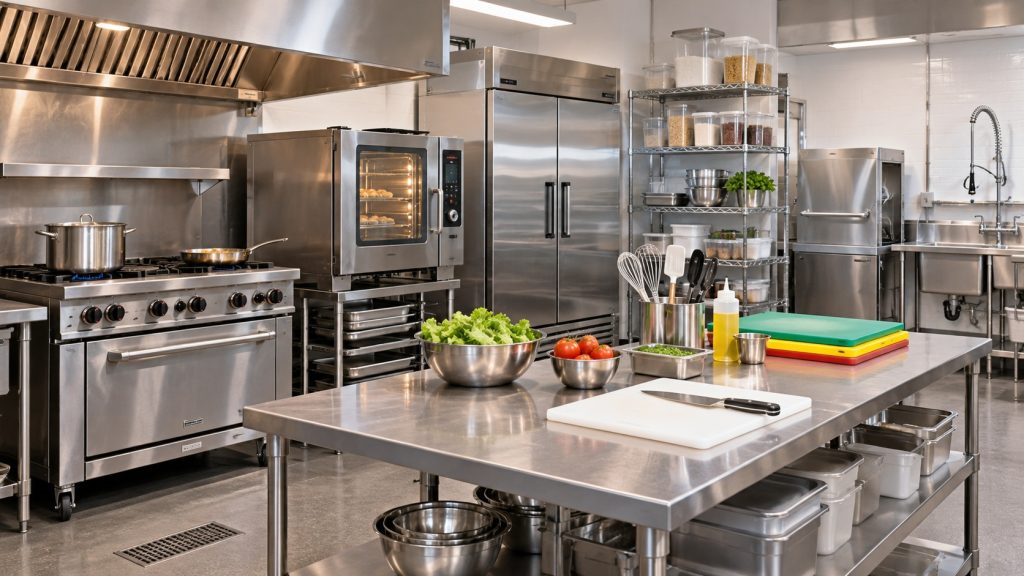
Commercial Kitchen Equipment Checklist: The Essentials at a Glance
Use this commercial kitchen equipment checklist as a starting point. These equipment categories cover the basics; adjust them to suit your service model and production volume.
- Cooking and holding: A suitable oven or range, pots, pans, trays, and hot-holding equipment if your menu requires it.
- Preparation: Stainless steel work tables, knives, cutting boards, mixing bowls, measuring tools, and a food thermometer.
- Refrigeration: Commercial refrigerator, freezer if needed, shelving, and temperature-monitoring tools.
- Storage: Food-grade storage containers, labeled ingredient bins, and storage racks.
- Washing and sanitation: Required sinks, soap and paper towels, sanitizers, and appropriate dishwashing equipment.
- Safety and ventilation: Appropriate exhaust ventilation, fire protection, first aid kits, and non-slip floor measures.
- Service: Packaging, serving utensils, and food-holding or transport supplies when applicable.
Not every item is compulsory for every operation. A restaurant kitchen equipment list will look different from one for a jam business or a coffee shop. Confirm your floor plan and equipment requirements with the local health and building authorities before ordering large appliances.
1. Cooking Equipment: Match the Appliances to Your Menu
Commercial cooking equipment forms a major part of the startup budget. Start by listing what you’ll cook, how many portions you’ll need at peak times, and whether orders are made individually or in batches.
Ovens, Ranges, and Stovetops
These are the most common cooking equipment choices:
- Commercial range: Versatile for boiling, sautéing, and simmering. Useful for a restaurant kitchen making several dishes to order.
- Commercial oven: Suitable for roasting, baking, and reheating, but choose the size and type around your actual workload.
- Convection ovens: Circulate hot air, making them useful for baking trays of pastries, vegetables, and other foods more evenly.
- Deck ovens: Often chosen for bread and artisan pizza, where a heated baking surface matters.
- Pizza ovens: Worth considering for a pizza-focused menu, but usually unnecessary for general catering.
A small bakery may prioritize a mixer and oven over a stovetop. A catering business preparing soups and sauces may need several burners instead. Undersized appliances make consistent food quality harder to achieve; oversized ones waste space and money.
Griddles, Fryers, and Rapid-Cook Ovens
Add a griddle for breakfasts or sandwiches, or a fryer if fried foods are central to the menu. A steamer may be more useful for vegetables and dumplings. If finished dishes wait before serving, plan for appropriate hot-holding equipment as well.
High-speed ovens combine different heating methods to prepare or finish food quickly. They’re popular in cafés and quick service restaurants where customers expect fast service.
These commercial kitchen appliances can be expensive, so compare throughput, ventilation requirements, and maintenance needs before buying. Match capacity to service expectations: five-minute sandwiches call for a different setup from preordered family meals.
Plan for repairs, too. Check whether filters, seals, and other replacement components are available for your chosen equipment. For example, an operator using a Merrychef rapid-cook oven can source Merrychef Parts for compatible items such as air filters and door seals. Electrical and microwave repairs should be left to qualified technicians.
2. Food Preparation Equipment and Smallwares
Food preparation equipment is less glamorous than an oven, but it determines how smoothly each shift runs. A cramped worktop or too few knives can slow the whole team.
Start with these food prep supplies:
- Stainless steel work tables with enough room for each task.
- Chef’s knives, peelers, tongs, ladles, spatulas, and mixing bowls.
- Separate cutting boards for raw ingredients and ready to eat foods.
- Measuring cups, portion scales, timers, and calibrated probe thermometers.
- Sheet pans, strainers, colanders, and other everyday prep tools.
For higher-volume food prep, consider a commercial mixer, food processor, slicer, blender, or spice grinder. Buy specialized prep tools only when they solve a repeated problem, such as chopping hundreds of vegetables each morning.
Organize the professional kitchen so ingredients move logically from washing and chopping to cooking and plating. Keep raw meat away from cooked food, and clean and sanitize cutting boards and other food-contact surfaces between tasks. Good layouts support both speed and food safety.
3. Refrigeration Equipment and Cold Storage
Refrigeration equipment is essential when you handle perishable ingredients. The right capacity protects food quality and gives staff enough room to store ingredients safely.
For most small businesses, start with commercial reach-in refrigerators and add a freezer if your menu calls for frozen stock. Refrigerated prep tables can keep frequently used ingredients close to the workstation. Larger kitchens may need walk-in coolers, but they come with substantial space and installation requirements.
When comparing refrigeration units, check:
- Usable capacity: Can they hold your busiest day’s deliveries without overcrowding?
- Temperature control: Are temperatures easy to monitor and record?
- Layout: Can staff access ingredients without blocking the cooking line?
- Running costs: Is there an energy-efficient model that fits your needs?
Plan separate spaces or secure arrangements for raw foods and cooked food, and cool prepared dishes using approved methods before refrigerated storage. Good cold storage and temperature checks help reduce food spoilage and support food safety compliance.
For more on checking temperatures, see our guide to safe cooking temperatures. Always follow the specific foodservice rules that apply to your business.
4. Storage Equipment: Keep Ingredients Accessible
Dry storage is easy to overlook when budgeting for kitchen equipment. Yet a lack of shelving can turn even a well-equipped restaurant kitchen into a cluttered space.
Include food storage containers with secure lids, labeled ingredient bins, and sturdy storage racks designed for foodservice. Keep supplies off the floor and arrange them so older stock is used first.
Smart storage solutions also improve inventory management. When employees can see what is available, they’re less likely to over-order ingredients or discover expired stock. That means less food waste and fewer frantic supply runs.
For canning or preserving businesses, remember that commercial production may need specialized processing equipment and approvals beyond this general equipment checklist. Starting a food business from home is a useful first step, but verify what your state permits before selling preserved products.
5. Dishwashing Equipment and Cleaning Supplies
Don’t build a beautiful cooking line and leave nowhere to wash a pot. Cleaning and sanitizing need dedicated space and enough capacity for busy periods.
Most permitted food businesses need dedicated handwashing sinks and approved warewashing facilities, often including a three-compartment sink. A commercial dishwasher may save labor in a busy restaurant kitchen, but it does not automatically replace required sinks. Confirm the layout with your local inspector.
Stock the basics:
- Approved cleaning chemicals and food-contact sanitizers, with the correct test strips.
- Brushes, mops, buckets, and other cleaning tools.
- Disposable towels or appropriately managed cleaning rags.
- Covered trash containers and suitable waste-handling supplies.
Keep cleaning equipment organized, store chemicals away from ingredients, and label them correctly. Train staff on when to clean, when to sanitize, and how to use products at the manufacturer’s specified concentration.
6. Ventilation and Safety Equipment
Cooking equipment generates heat, steam, smoke, and sometimes grease-laden vapors. Your ventilation system needs to match what you’re cooking—not simply the size of the room.
Depending on appliances and local fire rules, a restaurant kitchen may need a commercial exhaust hood and fire suppression systems. Have a qualified professional assess the design before you purchase or install equipment.
Your safety equipment may also include suitable fire extinguishers, stocked first aid kits, non-slip mats, and wet floor signs. Keep exits clear, train staff on emergencies, and make sure electrical and gas installations are appropriate for commercial use.
The FDA Food Code provides a useful model for food safety, but state and local authorities determine the actual requirements in your area. Get their approval before making expensive changes to the space.
7. How to Choose the Right Commercial Kitchen Equipment
Two businesses can follow the same restaurant kitchen equipment list and still need very different setups. Before purchasing commercial kitchen equipment, answer these questions.
What Will You Serve—and How Quickly?
A coffee shop may rely on refrigeration, a high-speed oven, and a few preparation stations. A bakery needs baking capacity and cooling racks. A restaurant kitchen serving a full menu needs flexible cooking equipment, while a meal prep or catering business benefits from batch cooking and safe transport.
If you’re planning weekly prepared meals, our meal prep business guide explains the wider business decisions behind the menu.
Does the Equipment Fit the Space and Budget?
Measure doorways, clearances, work aisles, plumbing, electrical capacity, and available ventilation before ordering. Compare equipment specifications rather than relying on photos alone.
Compare energy efficiency alongside the purchase price. Energy efficient equipment can reduce running costs, but servicing, consumables, and replacement parts matter too. Used equipment may save money upfront; check its condition, warranty, installation compatibility, and service availability first.
What Happens on Your Busiest Day?
Choose reliable equipment that can handle realistic peak demand without forcing staff to work around bottlenecks. For multi unit operators, selecting consistent models across sites can also simplify training and maintenance.
8. Final Commercial Kitchen Equipment Checklist Before Buying
Before committing to your kitchen equipment, run through this final equipment checklist:
- Menu: Have I separated must-have appliances from optional extras?
- Volume: Can the kitchen handle the busiest expected service?
- Space: Does every item fit the floor plan, including installation clearances?
- Utilities: Are ventilation, water, drainage, gas, and power adequate?
- Compliance: Have local officials reviewed the proposed setup?
- Ownership costs: Can I afford cleaning, maintenance, utilities, and repairs?
The best commercial kitchen equipment list isn’t the longest. It’s the one that helps you deliver safe, consistent food without tying up cash in machines you rarely use. Start with the essentials, add specialist kitchen equipment as demand grows, and build a workspace your team can actually enjoy using.
Leave a Reply